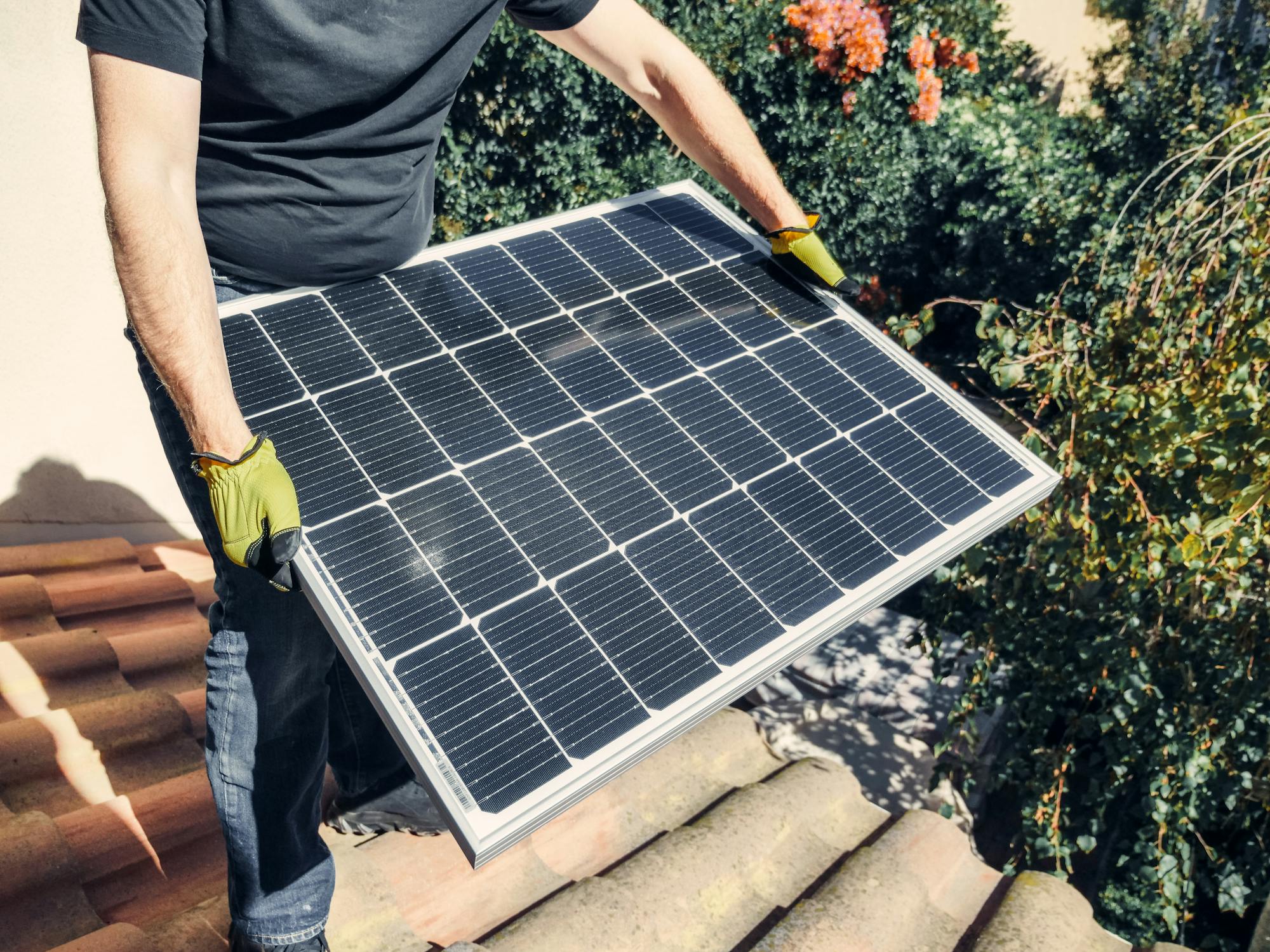
The energy label used to be a formality in the sales brochure. In 2026 it is money — in three different ways. It determines how much extra you can borrow, how much financing room you get for renovations, and it moves the value of the home itself. Here is how the label works through your mortgage, with the amounts that apply in 2026.
1. A better label = a higher maximum mortgage
Since 2024, lending standards explicitly account for the energy label: an economical home has lower energy costs, leaving more room in your budget for mortgage payments. On top of your regular maximum mortgage you can borrow extra:
• Label A or A+: about €10,000 extra
• Label A++: about €15,000 extra
• Label A+++: about €25,000 extra
• Label A++++ (energy-neutral): about €40,000 extra
• Label B or lower: no extra borrowing capacity
This is not a subsidy — it is borrowing capacity, so it increases your monthly payments. But in a market where a few tens of thousands decide whether you can bid at all, the difference between viewing a label A home and a label C home is real. Our maximum mortgage calculator includes the label: select the energy label and you see the extra room immediately.
2. Financing renovations: up to 106% of the home value
Buying a home with label D and improving it? You can co-finance energy measures up to 106% of the home value — the only exception to the 100% financing limit. The extra budget must genuinely go to energy measures (insulation, heat pump, solar panels), often via a renovation deposit (bouwdepot).
With NHG there is an extra advantage in 2026: the cost limit rises from €470,000 to €498,200 when you include energy-saving measures. So a home that would just exceed the NHG limit can still fall under the guarantee — including its interest discount.
What do the measures themselves cost, what do they save, and which ISDE subsidy applies? Our energy savings calculator lines it up per measure, including the financing headroom and the expected jump in label.
3. The label moves the value of the home itself
Research by Brainbay and the Kadaster shows a structural price difference between energy-efficient and inefficient homes: a label A home sells for roughly 15 to 20 percent more than a comparable label G home. Improving the label is therefore not just lower bills — it is value creation.
Two practical implications when buying:
• A cheap label F/G home is less of a bargain than it looks: count on renovation costs, and lenders may be stricter.
• An overpriced-looking label A home can be rationally priced once you factor in €150-plus lower monthly energy costs and the resale premium.
Curious what a label jump would do for a specific home? The house value predictor includes the energy label in its estimate.
And the interest rate?
Many lenders offer green discounts: for label A (or after energy renovation) the rate is often a few tenths lower, and dedicated green mortgages started around 3 percent in mid-2026 — against roughly 4 percent for a standard 10-year fixed NHG rate. On €400,000 over 30 years, a few tenths of a percent is thousands of euros. Compare scenarios with the interest rate comparison tool.
The bottom line
For the same €400,000 purchase, a label A home versus a label C home can mean: €10,000 more borrowing capacity, a (slightly) lower interest rate, roughly €100-200 lower monthly energy costs, and a stronger resale position. The label deserves a place in your bidding strategy — not as a footnote, but as one of the numbers.
Please note: the amounts above follow the 2026 lending standards and are indicative. Lenders apply their own conditions; a mortgage advisor can calculate your exact situation.
Sources
• Nibud – Lending standards and energy label: nibud.nl
• NHG – Cost limit and energy-saving budget: nhg.nl
• RVO – ISDE subsidy: rvo.nl
• Brainbay/Kadaster – Energy label and house value: kadaster.nl